AI & Teaching Workshop

HMC Engineering Department Workshop

2024-08-22

Workshop Resources

URL: https://tinyurl.com/muddengai

QR Code

What tools are part of your classroom community?

  1. Chalkboard
  2. Whiteboard
  3. Slides
  4. Tablet
  5. Think-pair-share

What are the values embedded in these tools?

  1. Chalkboard: historical context, culture, limit speed
  2. Whiteboard: cleanliness, limit speed
  3. Slides: accessibility, efficiency
  4. Tablet: accessibility, limit speed
  5. Think-pair-share: community, conversation

What are the values embedded in Generative Artificial Intelligence?

What is artificial intelligence?

Key Terms and Concepts

Generative AI is a program capable of generating content like text, images, video, and computer code. Most genAI systems respond to a prompt entered in natural language by a user.

  • Large language model (LLM): Program that behaves like very sophisticated autocomplete. Examples: GPT-4, Gemini.
  • Generative Pre-trained Transformer (GPT): The specific architecture (also known as foundation model) of LLM first developed by OpenAI.
  • Multimodal: The ability to process and generate different types of media. For example, input text and output an image or video. Examples: Midjourney, DALLE-3, Sora.
  • Supervised machine learning: An machine learning algorithm trained using labeled data.
  • Unsupervised machine learning: A machine learning algorithm trained on unlabeled data.

An Abbreviated History of genAI

A rough timeline:

  • 1956: Field of AI research begins at workshop at Dartmouth College.
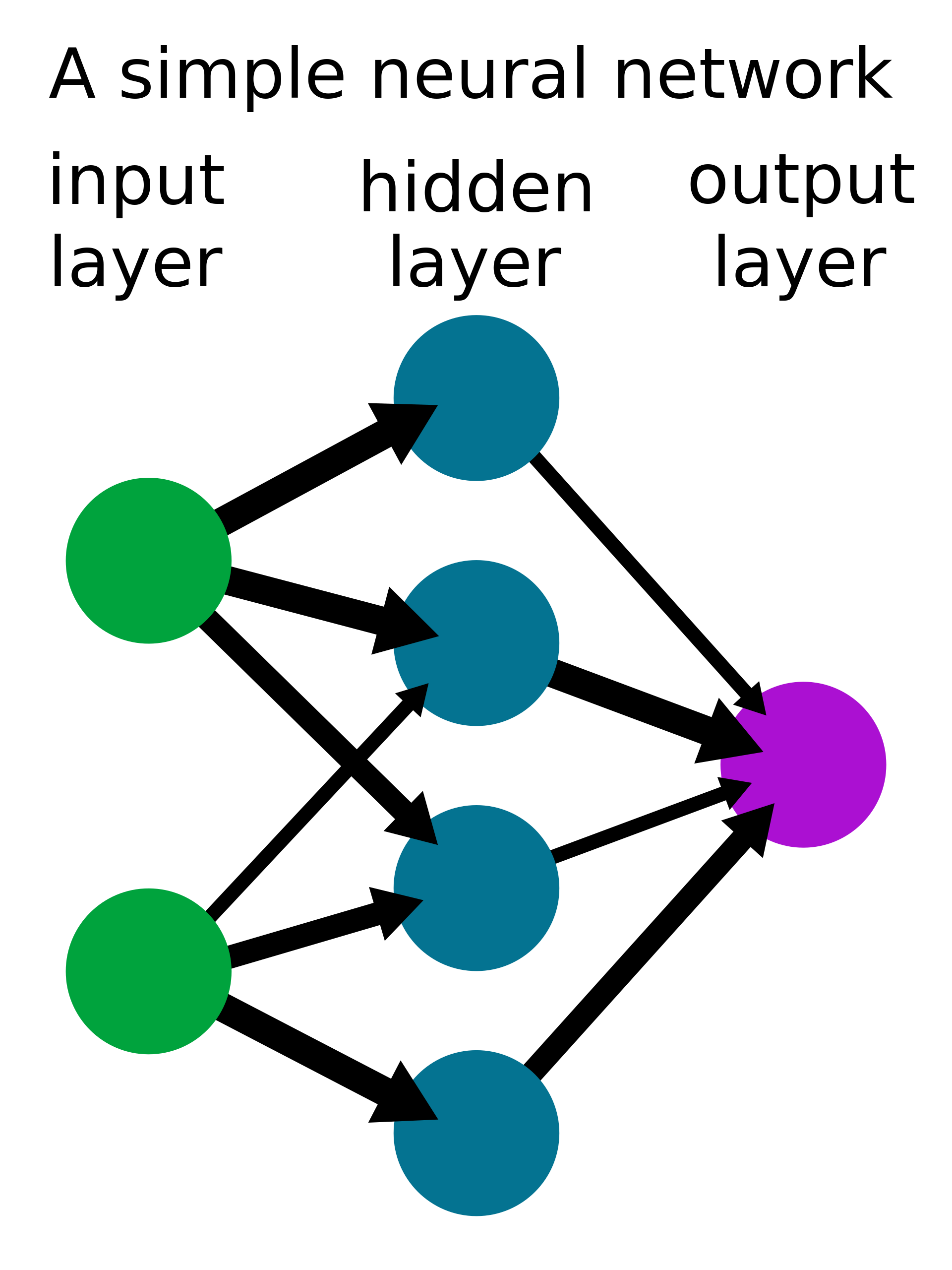
  • 1960s-1980s: Machine learning using neural networks is explored.
  • Late 2000s: Development of deep learning. Deep refers to multiple hidden layers in the network.
  • 2014: Generative Adversarial Networks (GANs) are developed.
  • 2018: OpenAI invents the Generative Pre-trained Transformer (GPT) architecture.
  • 2022: ChatGPT released to the public in November based on GPT-3.5.
Discriminative AI vs. Generative AI

Discriminative models focus on classification and prediction based on given data.

  • Facial recognition: Identify persons in photo library.
  • Speech recognition: Siri or Alexa.
  • Medical diagnosis: Classifying your MRI or X-ray images.
  • Autonomous navigation: Tesla full self driving.
  • Recommendation systems: Amazon predicting what you might want to buy.

Generative models are capable of creating outputs drawn from the distribution of input data they were trained on.

  • Text generation: LLMs which generate text from a prompt.
  • Image generation: Midjourney or DALLE to generate new images.
  • Drug discovery: Alpha Fold for predicting protein structure.

The medium is the message

A technology becomes a medium as it employs a particular symbolic code, as it finds its place in a particular social setting, as it insinuates itself into economic and political contexts. A technology, in other words, is merely a machine. A medium is the social and intellectual environment a machine creates.

Understanding Media (1994)
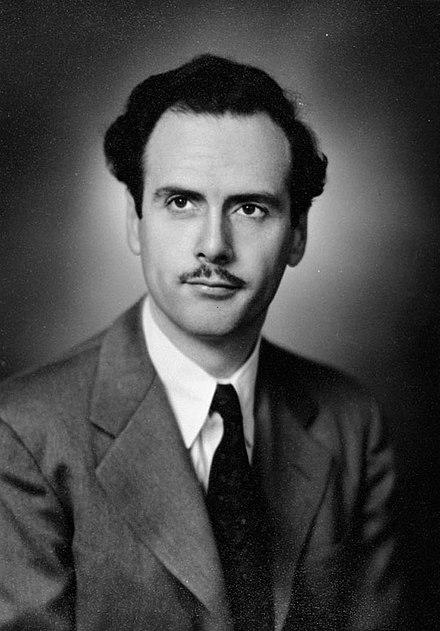
Marshall McLuhan

Neil Postman on the message in the medium

A news show, to put it plainly, is a format for entertainment, not for education, reflection or catharsis. And we must not judge too harshly those who have framed it in this way. They are not assembling the news to be read, or broadcasting it to be heard. They are televising the news to be seen. They must follow where their medium leads. There is no conspiracy here, no lack of intelligence, only a straightforward recognition that “good television” has little to do with what is “good” about exposition or other forms of verbal communication but everything to do with what the pictorial images look like.

Amusing Ourselves to Death (2005)
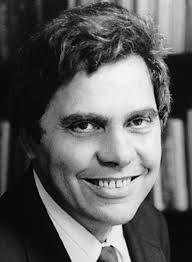
Neil Postman

Whose interest?

[Y]ears from now..it will be noticed that the massive collection and speed-of-light retrieval of data have been of great value to large-scale organizations but have solved very little of importance to most people and have created at least as many problems for them as they may have solved.

Amusing Ourselves to Death (2005)

Neil Postman

What is technology?

Recently, people have become particularly interested in technology’s social impact. I myself am overawed by the way in which technology has acted to reorder and restructure social relations, not only affecting the relations between social groups, but also the relations between nations and individuals, and between all of us and our environment. To a new generation, many of these changed relationships appear so normal, so inevitable, that they are taken as given and are not questioned.

The Real World of Technology (1989)
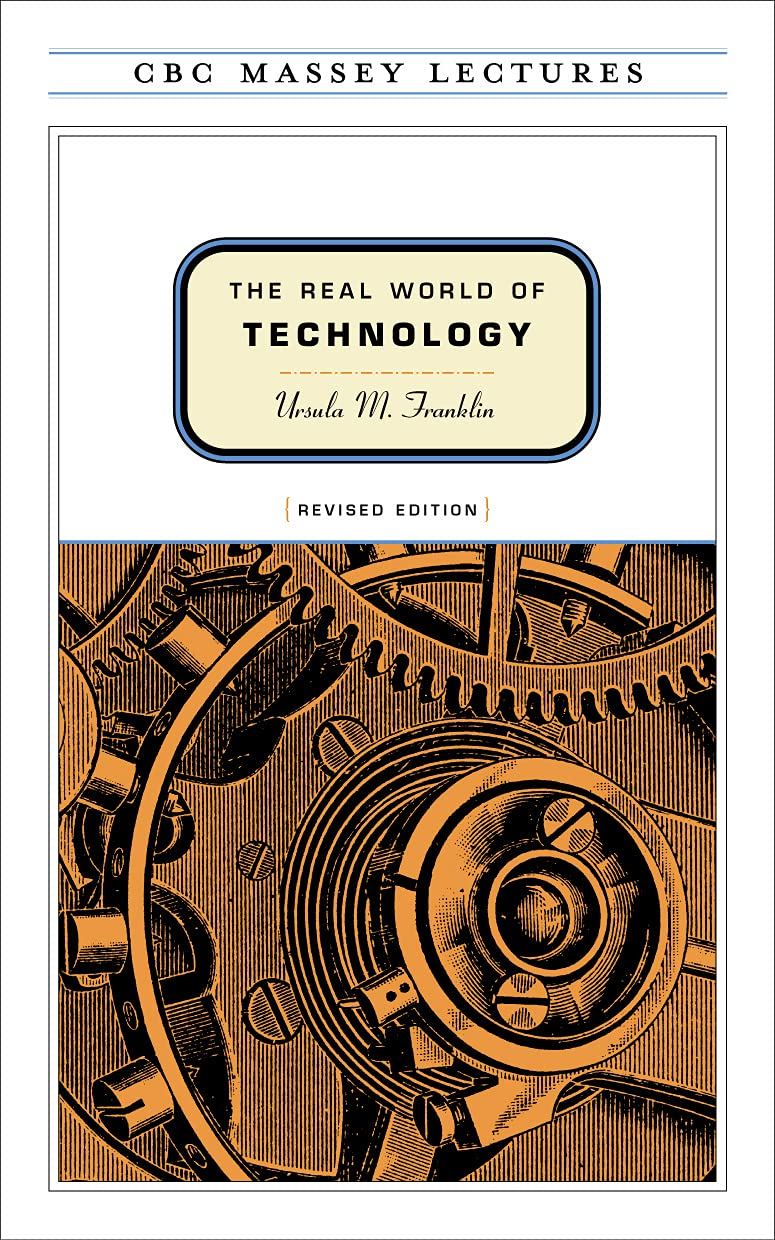
Ursula Franklin’s 1989 CBC Lectures

Workshop Goals

Goals for today

By the conclusion of this workshop you will have…

  • Reflected on your values as an educator and how they are expressed in your classes.
  • Developed a curiosity to experiment with generative artificial intelligence.
  • Outlined text for your syllabus to articulate your pedagogical values and examples of how those values work themselves out in your courses.
  • Developed an AI policy for your courses.

HMC Engineering Department Goals

  • Exceptionally Competent Graduates: Produce graduates who are exceptionally competent engineers whose work is notable for its breadth and its technical excellence.
  • Hands-On Curriculum: Provide a “hands-on” approach to engineering so that graduates develop an understanding of engineering judgment and practice, including ethics.
  • Foster Life-long Learning: Prepare and motivate students for lifetime of independent, reflective learning.
  • Societal Impact: Produce graduates who are aware of the impact of their work on the world.
  • Reasonable Curriculum: Offer a curriculum that is current, exciting and challenging for both students and faculty, but can be completed in four years by any motivated student who is admitted to Harvey Mudd College.

HMC Engineering Core Values

  1. We focus on our students. We care deeply about their education, their well-being, and their growth, and we build lasting relationships with them.
  2. We mentor and include our students in strong, healthy, curious teams to create positive impact on the world.
  3. We listen and learn, seeking to understand each other and the world more deeply. We foster inclusion and belonging.
  4. We embrace a prototyping mindset: we believe that progress emerges through trying and failing.
  5. We have high expectations - including technical excellence, leadership, and integrity - and we provide a high level of support.
  6. We believe combining hard work with joy and play enhances our creativity, productivity and well-being.

HMC Engineering Values Condensed

  1. Student Focus
  2. Teamwork
  3. Societal Impact
  4. Empathy
  5. Belonging & Inclusion
  6. Prototyping Mindset
  7. High Expectations
  8. Joy
  9. Play

Josh’s (Unofficial) Engineering Program Goals

Great Artists Steal

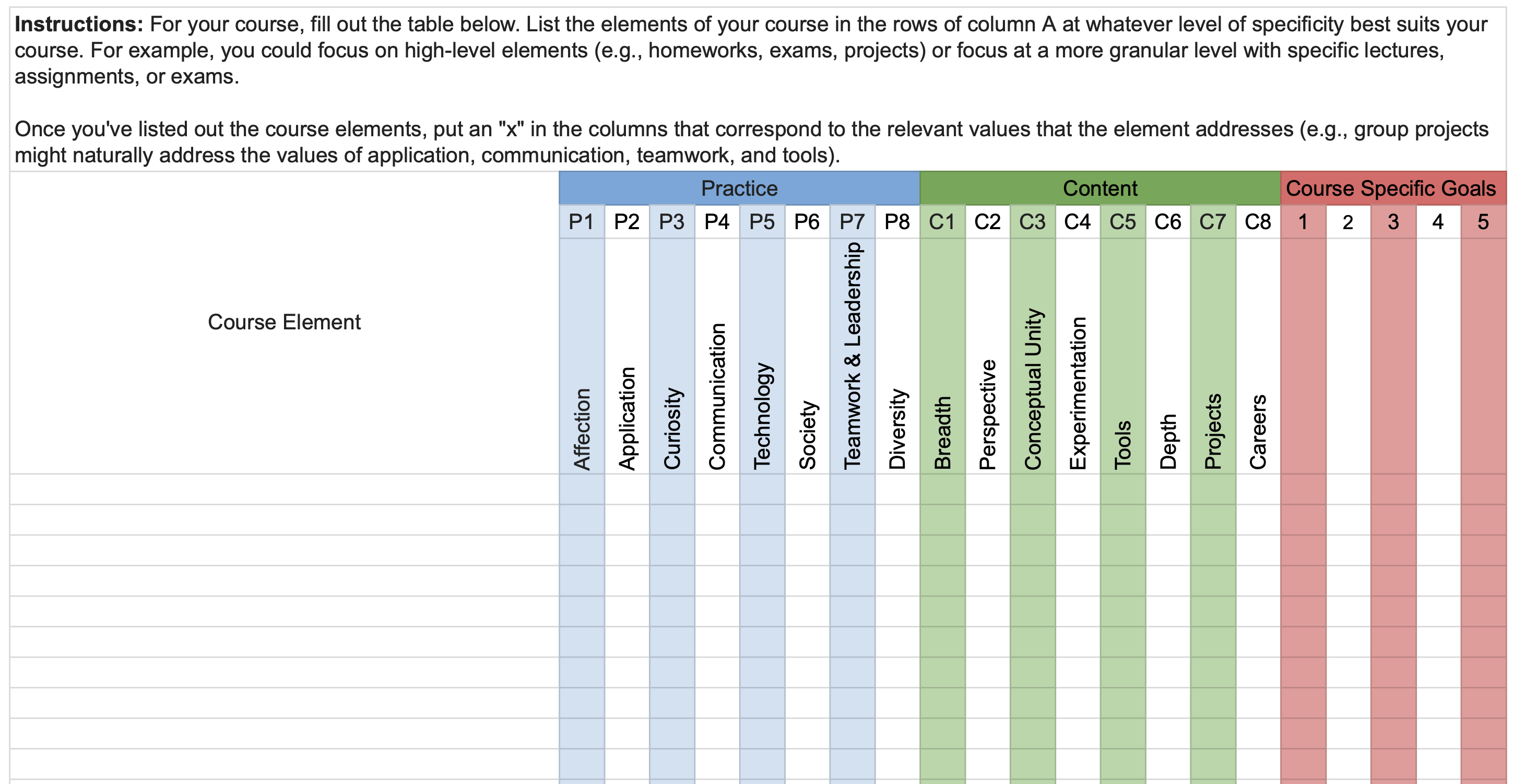
HMC Engineering Practice Goals

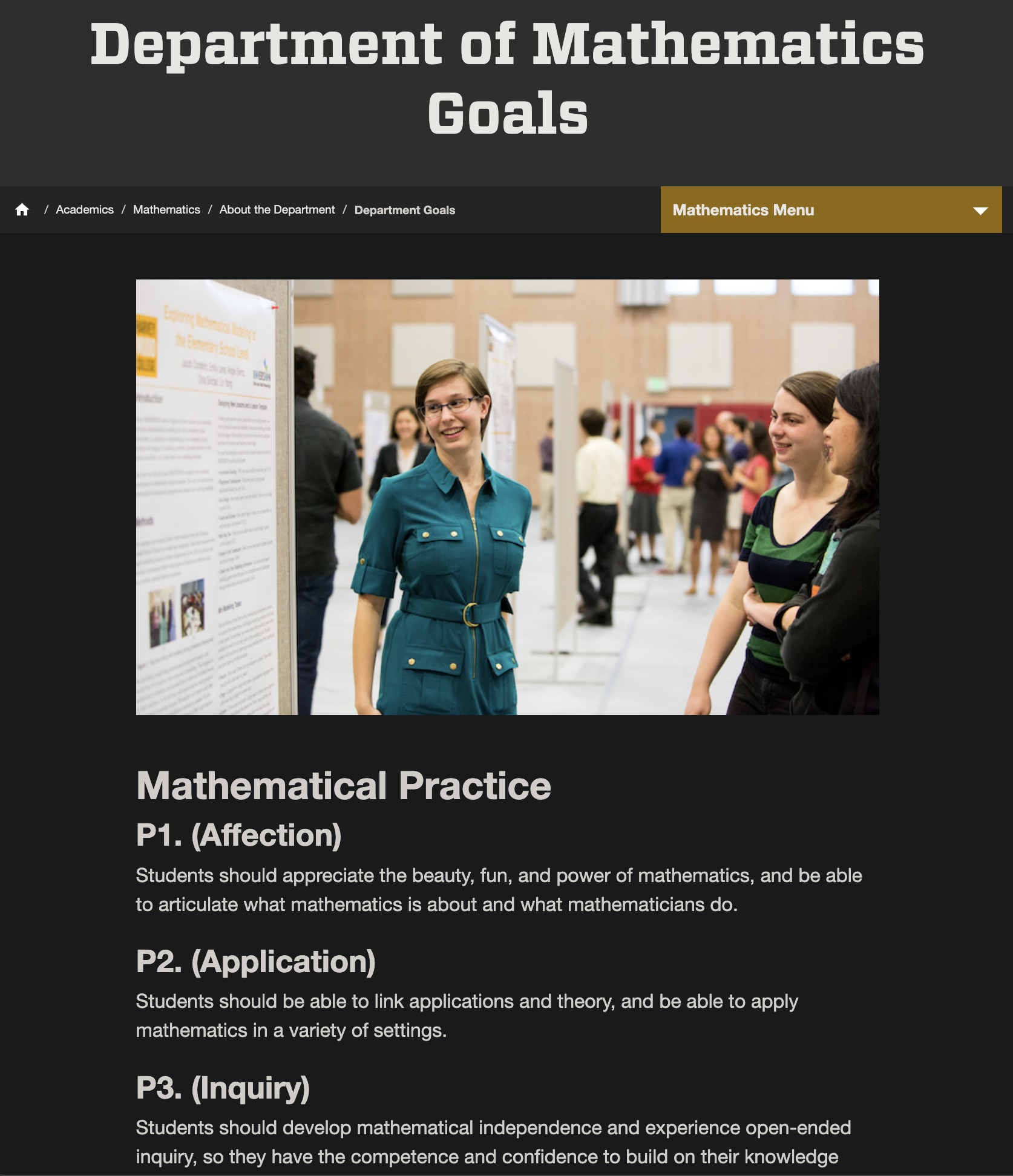
  1. Affection: Mudd engineers should appreciate the beauty, fun, and power of engineering and be able to articulate what this looks like in practice.
  2. Application: Mudd engineers should be able to link theory to application and apply concepts in a variety of settings.
  3. Curiosity: Mudd engineers should develop a deep sense of curiosity about the world and experience open-ended inquiry.
  4. Communication: Mudd engineers should develop effective thinking and communication skills.
  5. Technology: Mudd engineers should be able to use technological tools appropriately and effectively.
  6. Society: Mudd engineers should strive to be good citizens who understand the impact of their work on society.
  7. Teamwork & Leadership: Mudd engineers should be able to function well as part of a team and demonstrate leadership skills.
  8. Diversity: Mudd engineers should be able to work and communicate with diverse groups of people across a wide range of different backgrounds and identities.

HMC Engineering Content Goals

  1. Breadth: Mudd engineers should be competent across a broad range of engineering skills and topics.
  2. Perspective: Mudd engineers should demonstrate that they can see engineering topics from a variety of perspectives.
  3. Conceptual Unity: Mudd engineers should see the connection between topics across the various field of engineering.
  4. Experimentation: Mudd engineers should be able to design, build, execute, and analyze engineering experiments.
  5. Tools: Mudd engineers should be able to apply concepts and methods from design, computing, modeling, and experimental engineering.
  6. Depth: Mudd engineers should see at least one engineering topic in depth.
  7. Projects: Mudd engineers should work in teams on a substantial engineering project that involves techniques and concepts beyond the typical content of a single course.
  8. Careers: Mudd engineers should be aware of the wide range of careers for engineers.

Agenda for Today

Activities

  1. GenAI Demo
  2. GenAI Value Mapping
  3. Syllabus Revision

GenAI Demo

Lookee what he can do!

Yukon Cornelius and the Abominable Snow Monster

ChatGPT

ChatGPT Takes E155

ChatGPT Takes E155
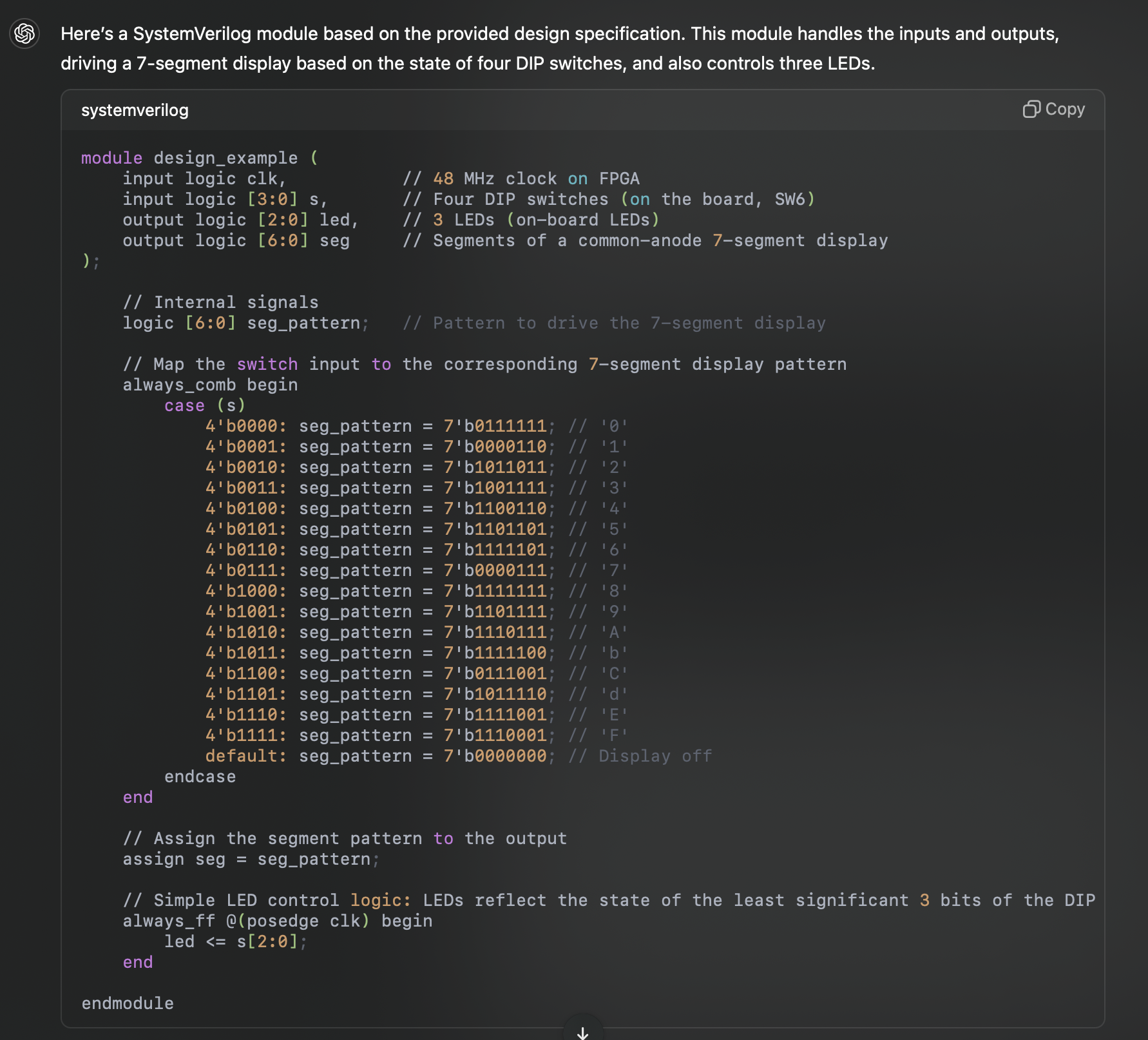
ChatGPT Takes E155
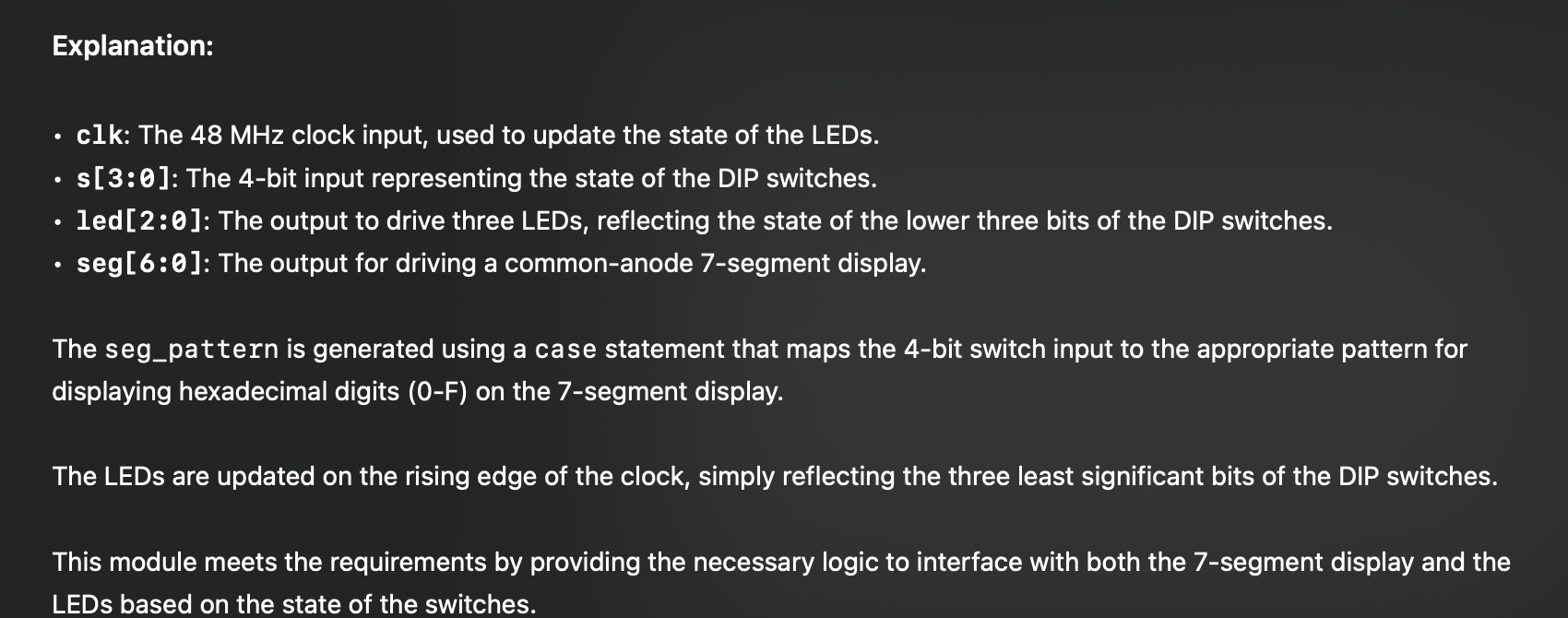
ChatGPT Takes E157
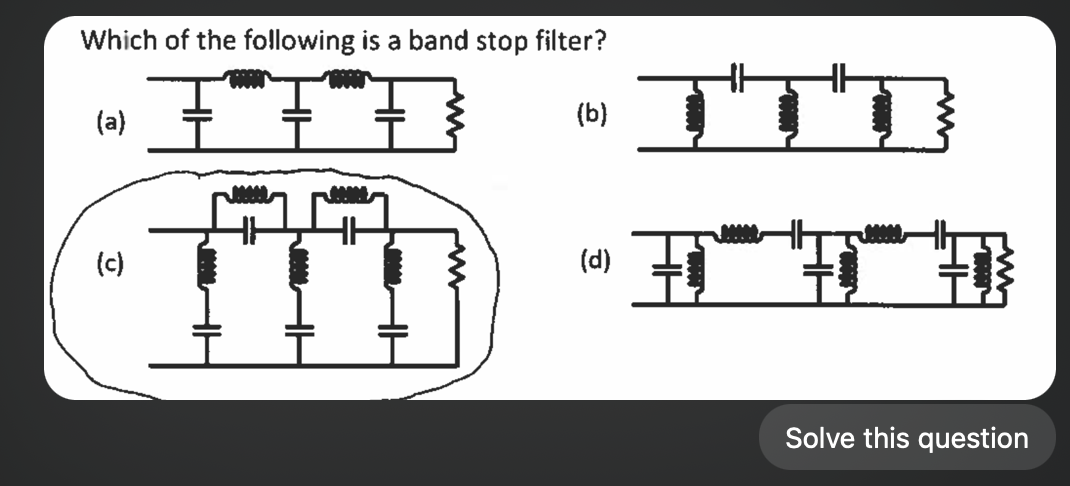
ChatGPT Takes E157
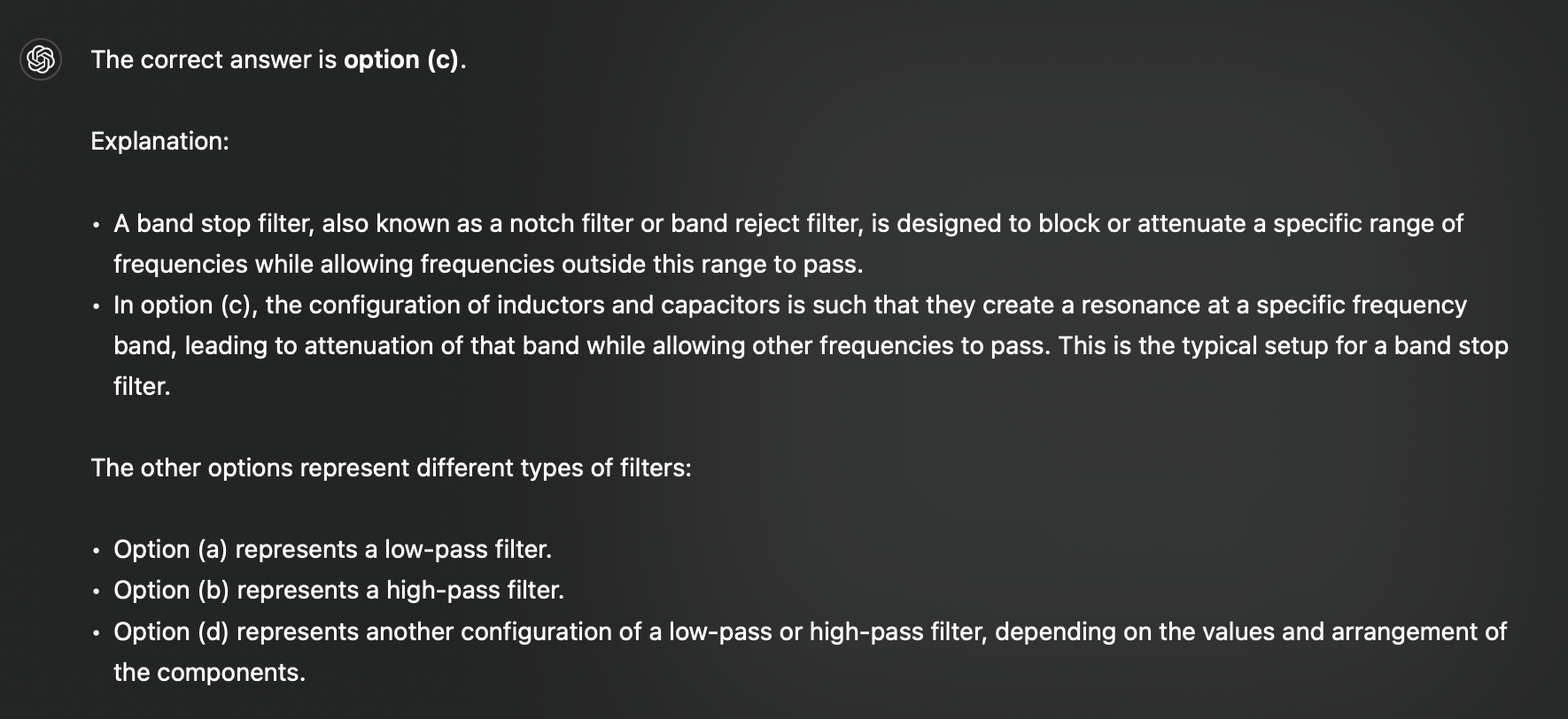
ChatGPT Takes E157 Pt. 2

ChatGPT Takes E157 Pt. 2
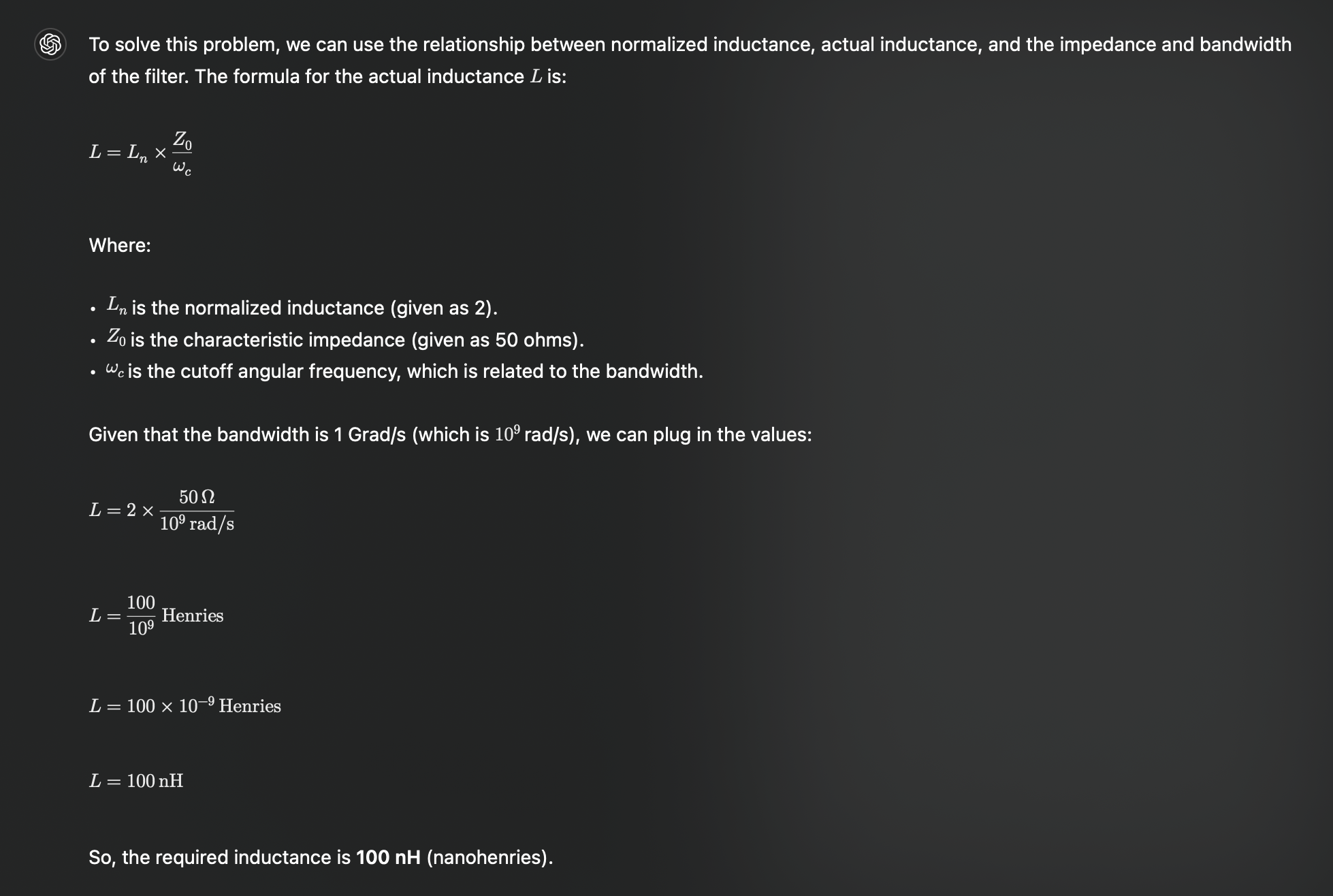
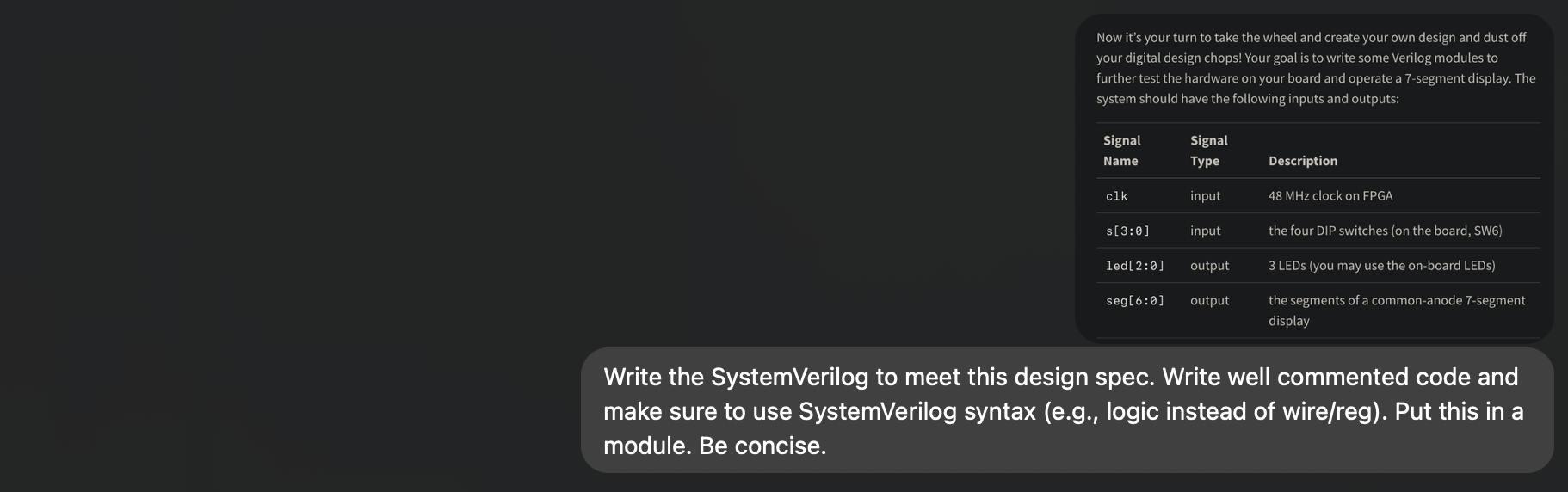
ChatGPT Takes E4
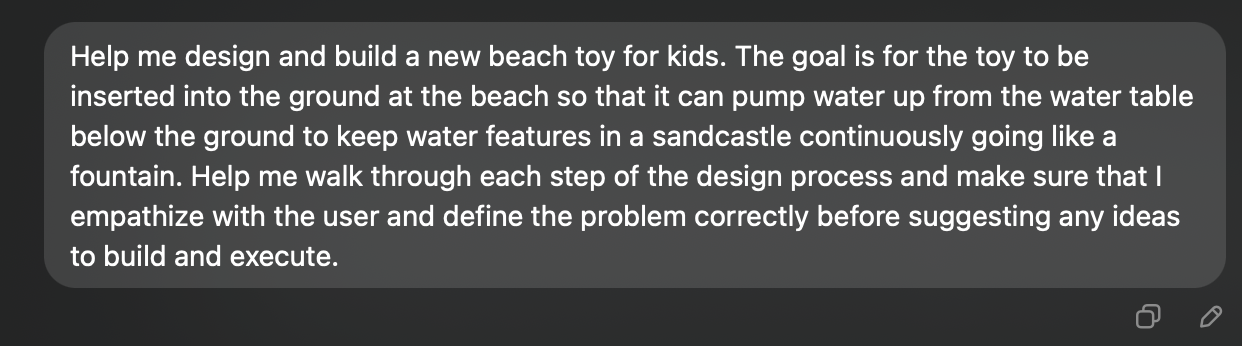
ChatGPT Takes E4
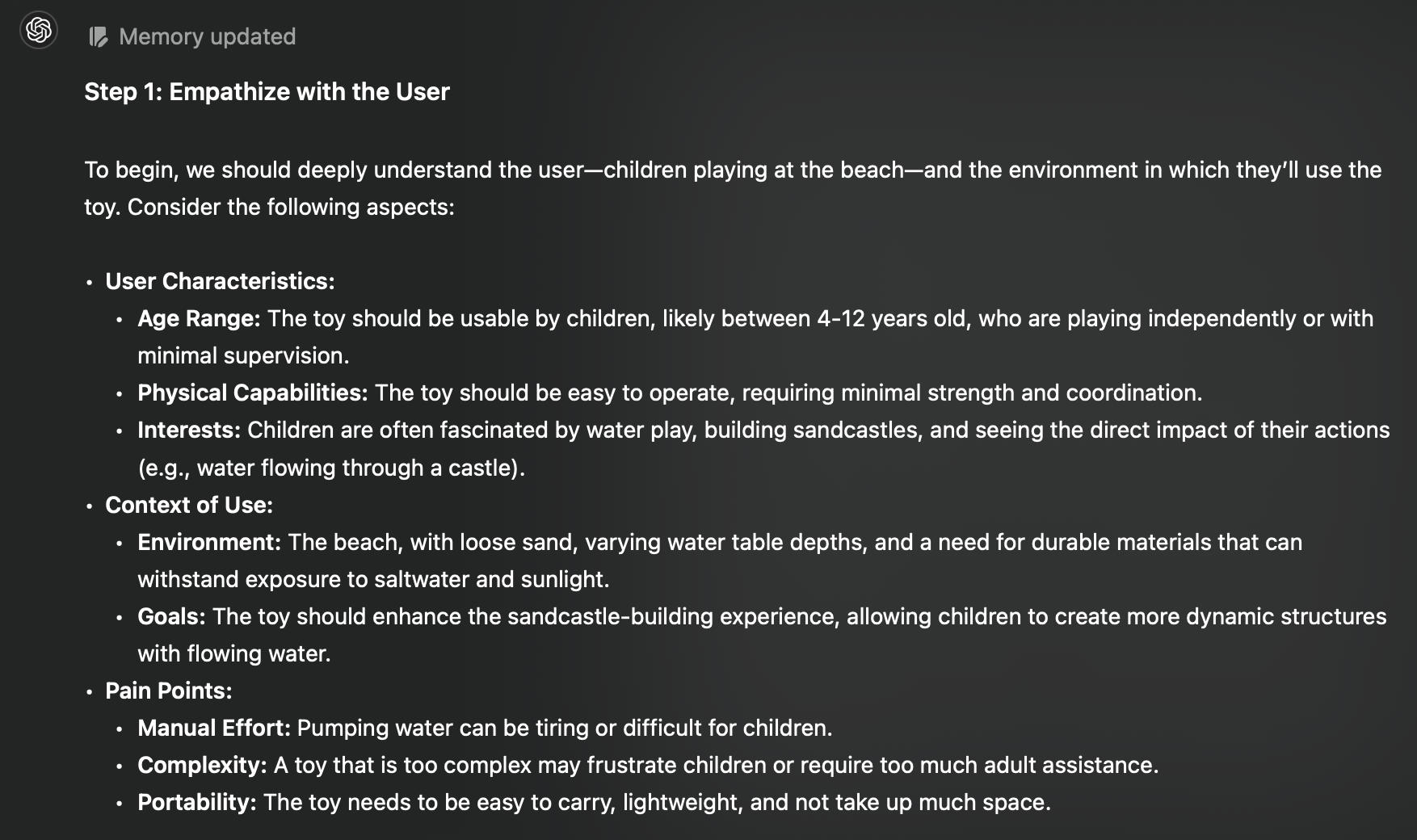
ChatGPT Takes E4
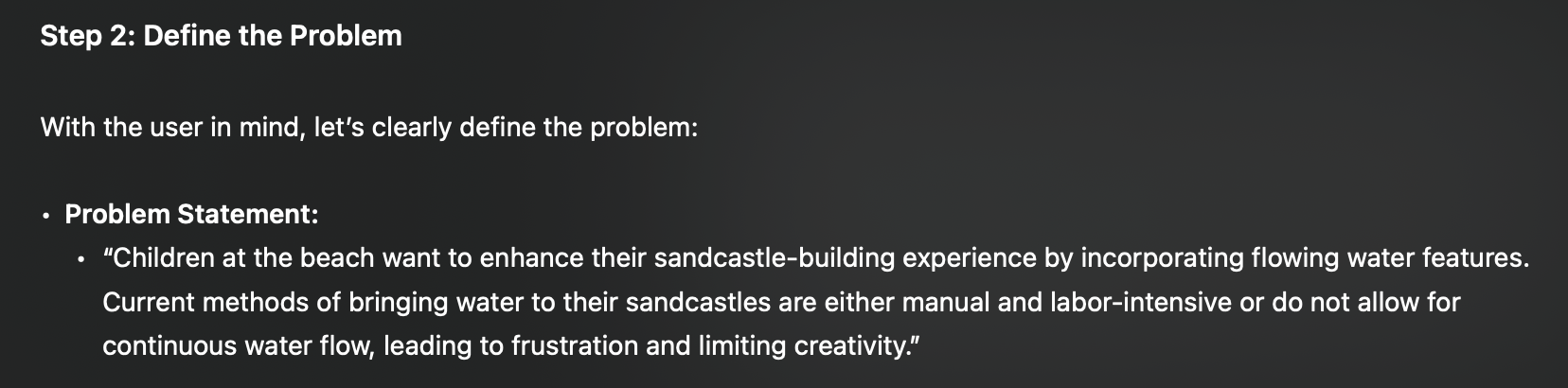
ChatGPT Takes E4
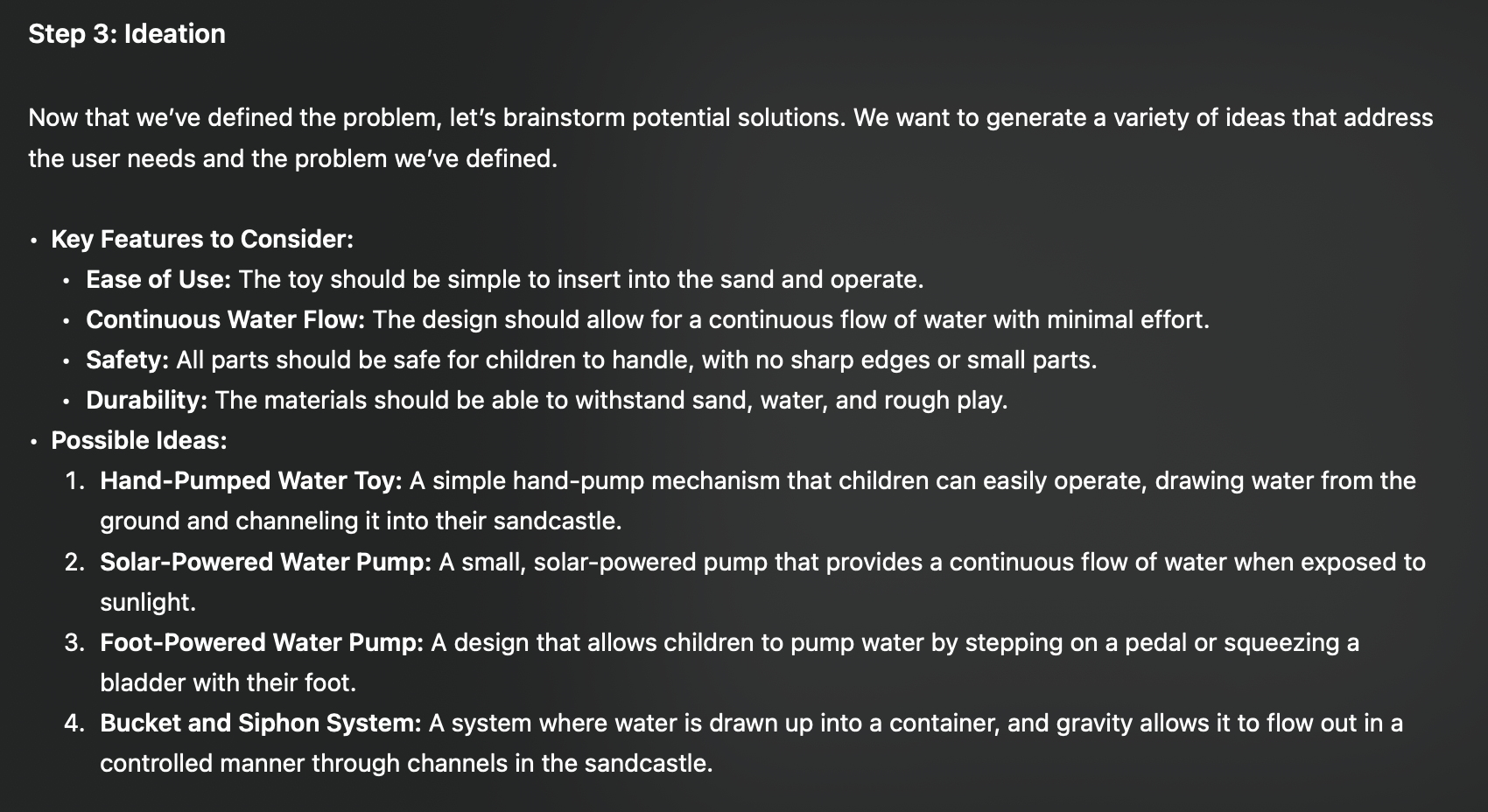
ChatGPT Takes E4
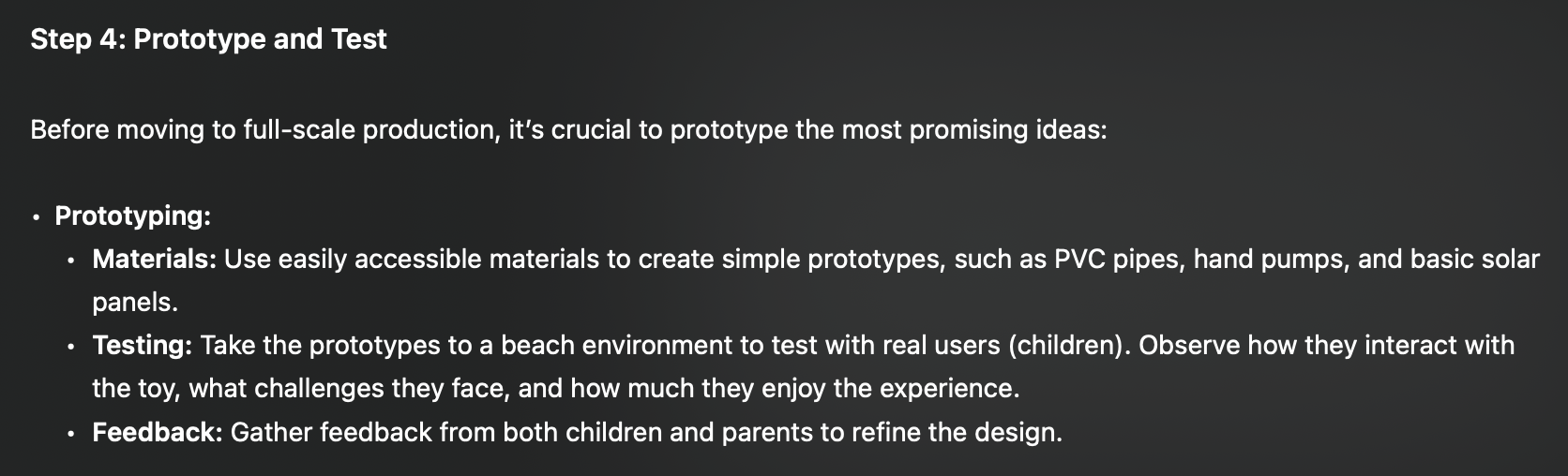
ChatGPT Takes E4
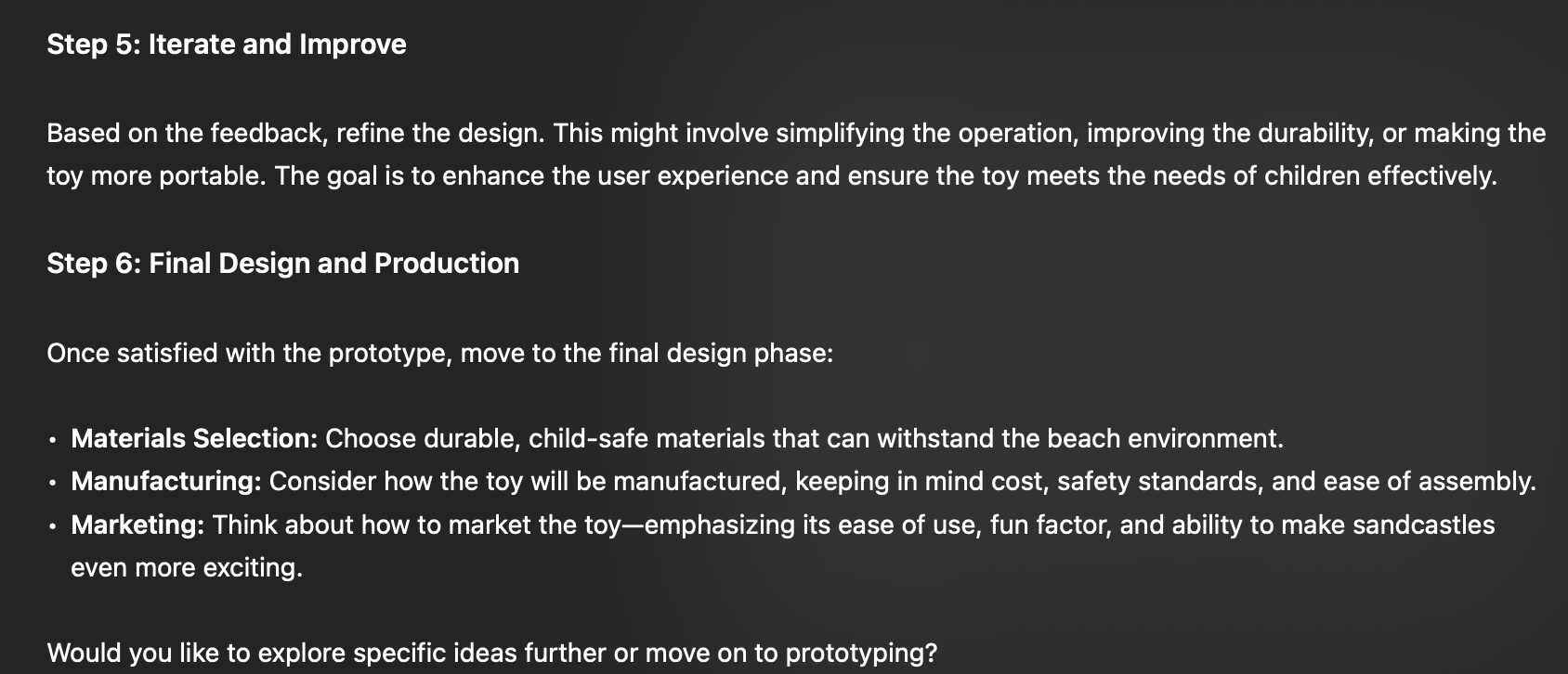
ChatGPT Takes E4 Pt. 2

ChatGPT Takes E4 Pt. 2
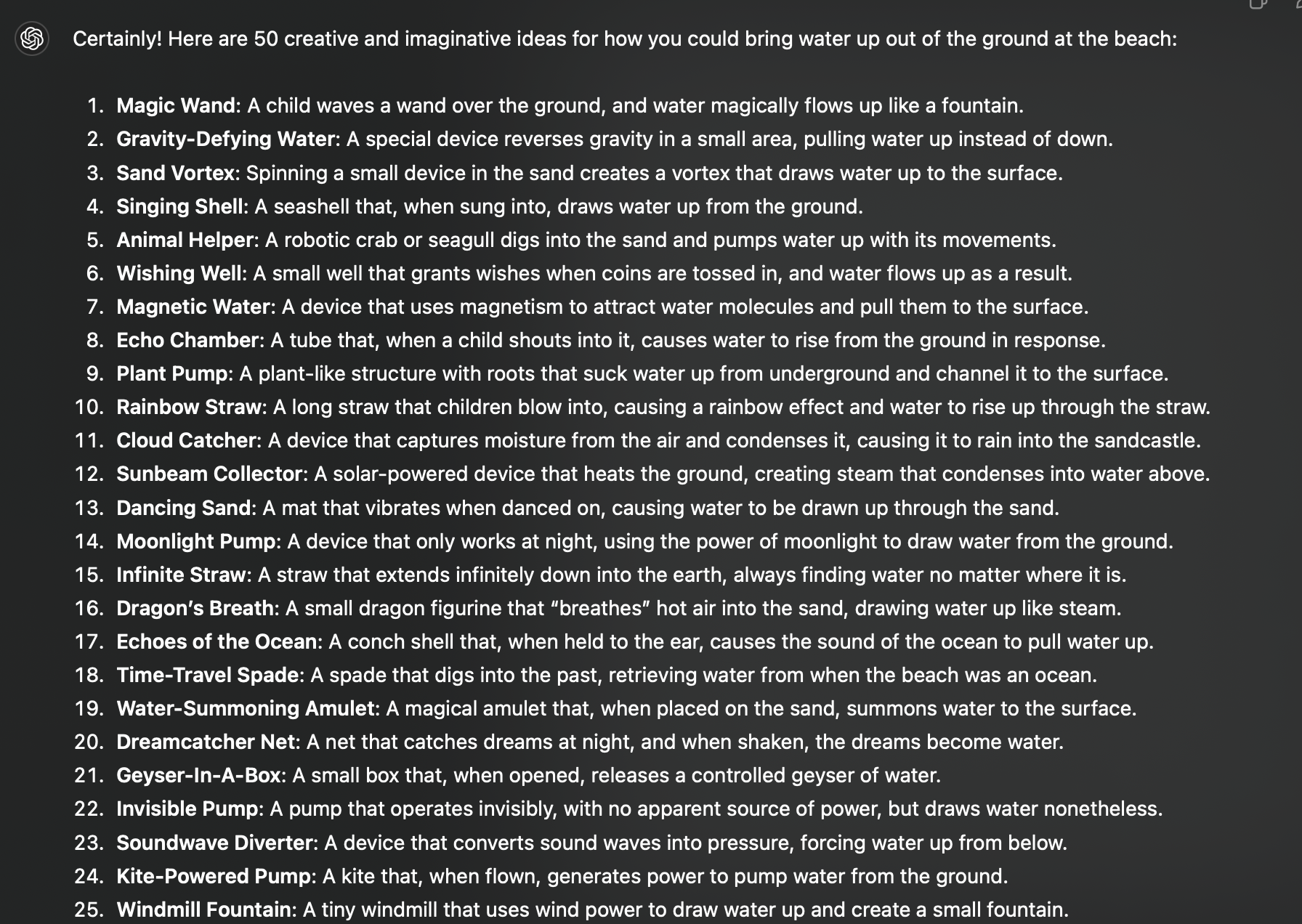
ChatGPT Takes E4 Pt. 2
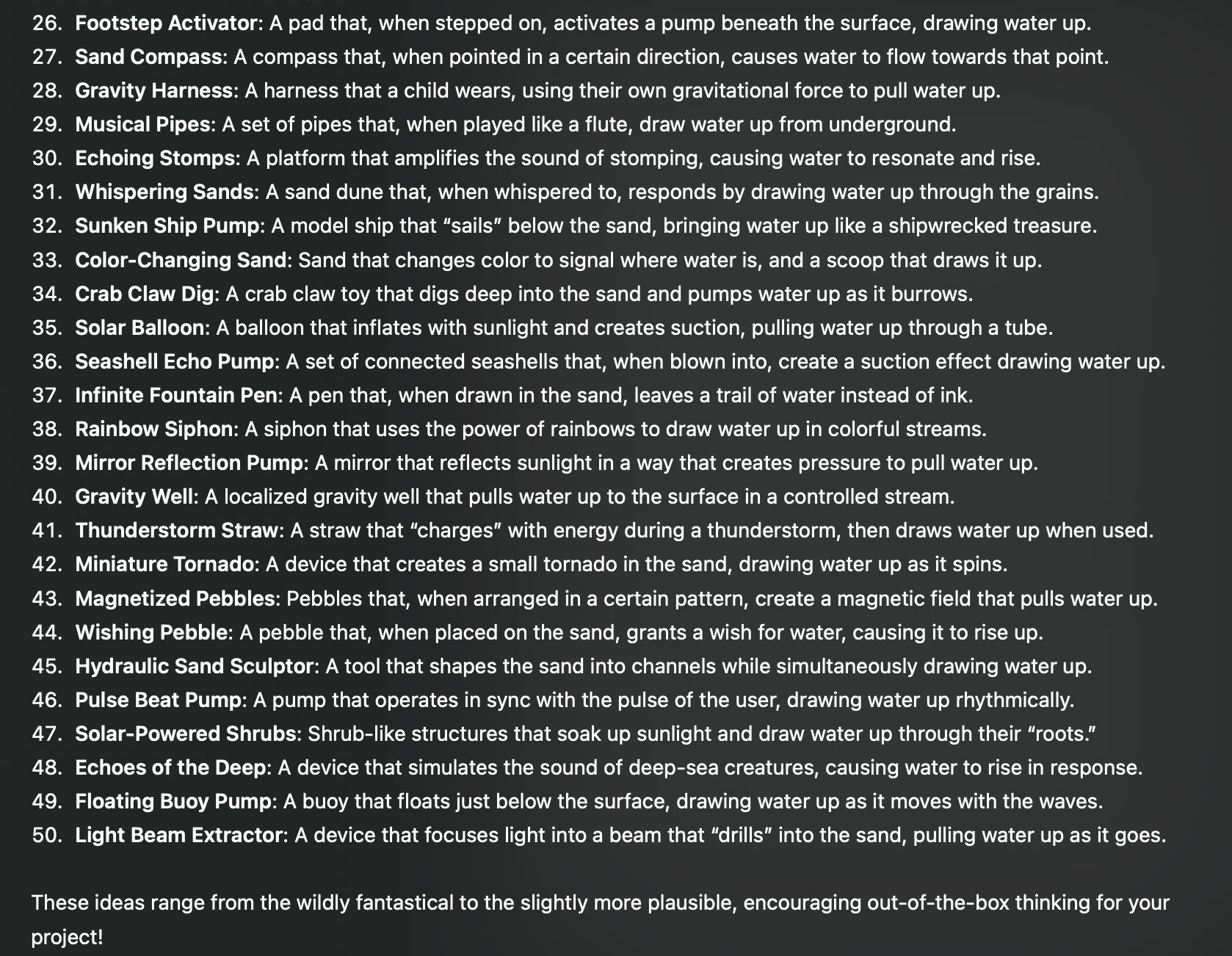
High-level Observations

  • LLM-generated text can reproduce the type of structure and format of problem solving we would like to see.
  • Clean syntax is no longer a worthy proxy for clear thought.
  • The types of errors in LLM-generated text are tricky to detect.
  • The LLMs “solves” the blank page problem.
  • Generating a solution is now effectively free.
  • The floor for communicating in writing has been raised.

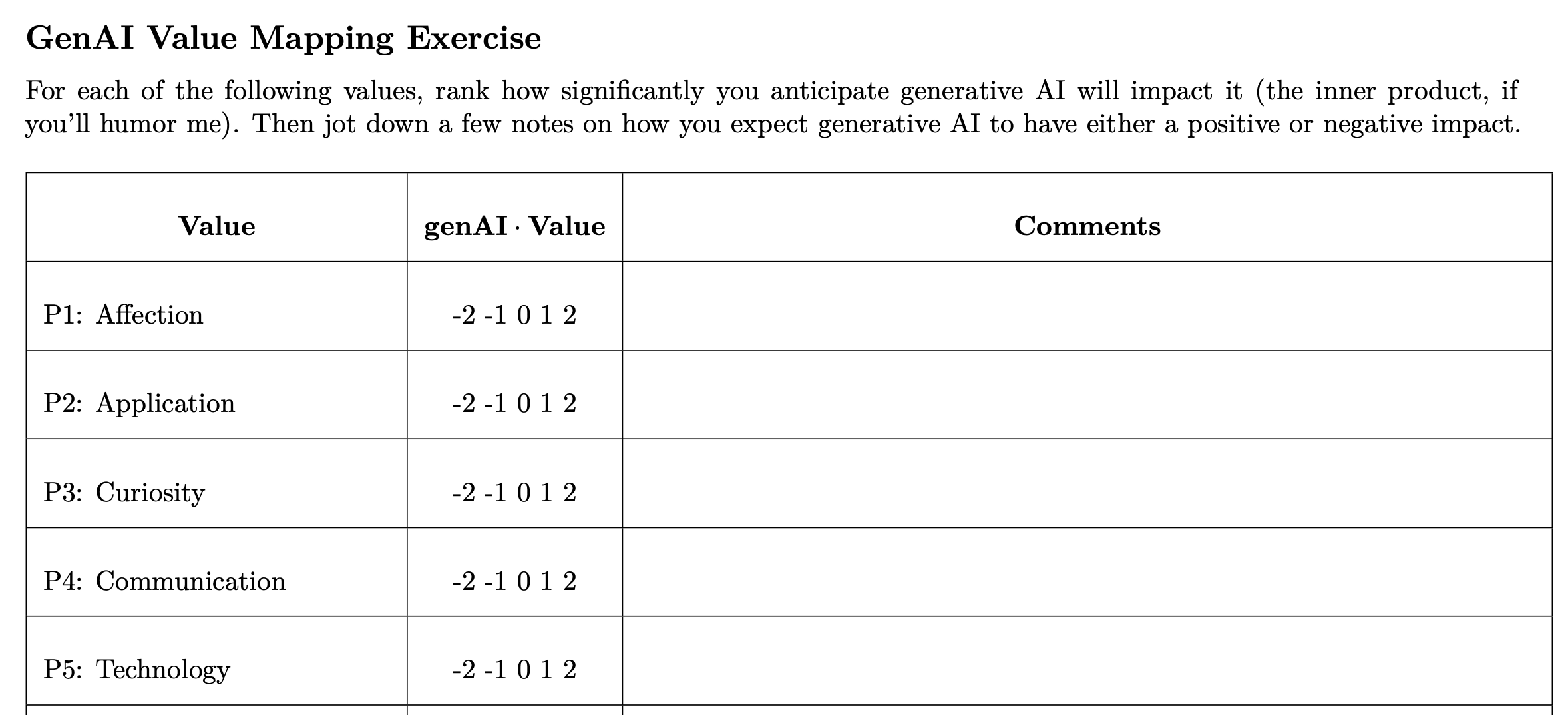
Activity #1: GenAI Value Mapping

Exploring alignment

Course intersections
Experimenting with AI in your courses

Some Principles

  1. Build trust
  2. Build agency
  3. Encourage reflection
  4. Explain what learning looks like
  5. Make values and learning goals explicit
  6. Find ways to show your students you trust them
  7. Build socio-technical thinking

Prototypes

For Students

  1. Homework Helper
  2. Interactive Encyclopedia
  3. Ideation Partner

For Instructors

  1. Pedagogy Coach
  2. Active Learning Activity Generation
  3. Feedback Summarization

Activity #2: Syllabus Revision

Elements of a Syllabus Policy

  1. A brief explanation of what generative AI is (here’s a nice interactive demo of transformers from the Financial Times)
  2. Your policy on generative AI use in the classroom
    • Avoid
    • Embrace
    • Critical Exploration
  3. An explanation of the reasoning behind your policy
  4. An articulation of your expectations around use if you are allowing genAI to be used (e.g., norms around disclosure, reporting requirements, etc.)

Resources

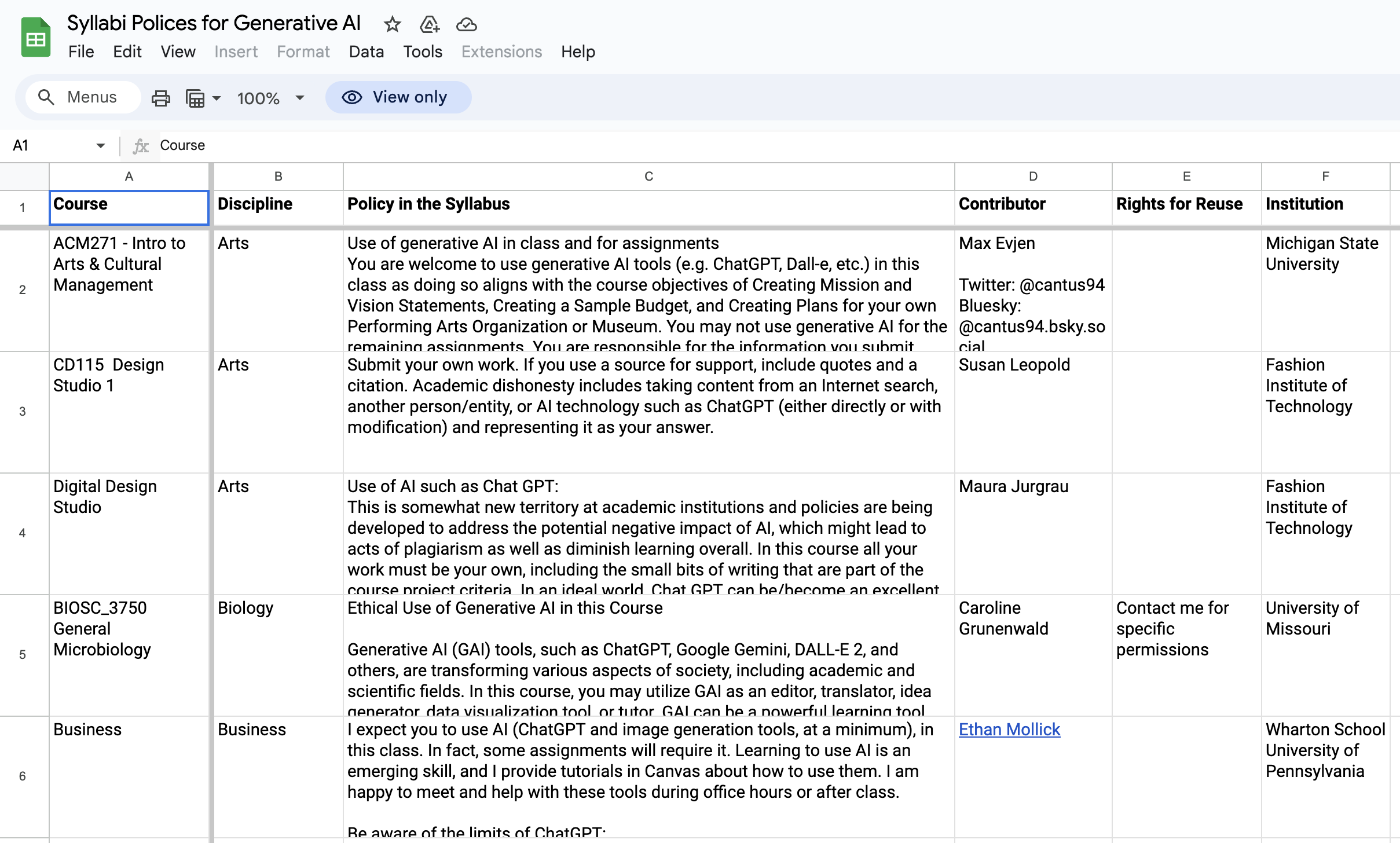
https://bit.ly/AI-Syllabi

Closing Thoughts

Some things you should discuss with students

  • When to use an LLM vs. talk to your classmate or instructor
  • The environmental considerations: the computational horsepower to run these things takes a lot of electricity and water.
  • Data privacy concerns: The ethical issues surrounding training data
  • Embedded biases

Contact Me

You know where to find me!